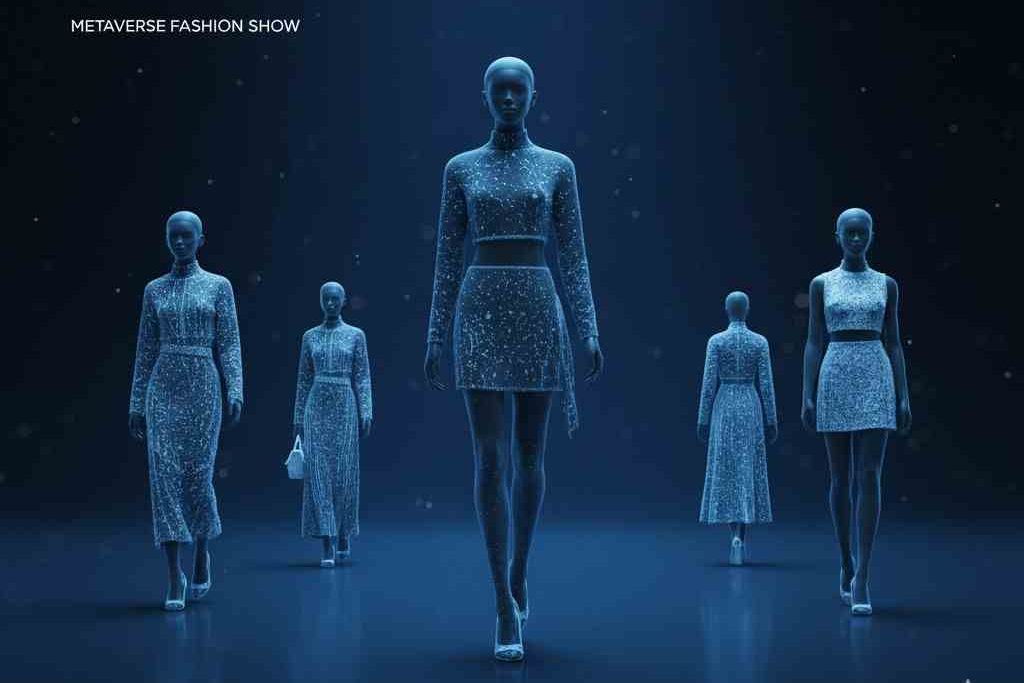
The 2026 Manifesto: How Digital Fashion Show Innovation is Neutralizing the Physical Runway
The global fashion industry is currently navigating its most significant paradigm shift since the invention of the sewing machine. The traditional catwalk, once a symbol of exclusivity and luxury, is rapidly becoming an environmental and logistical liability.
In its place, we are seeing the emergence of Digital Fashion Show Innovation—a sophisticated convergence of neural rendering, volumetric data, and generative intelligence that is redefining the very essence of “The Show.”
This transition is not merely a digital alternative to a physical event; it is a fundamental expansion of what is possible within the realm of artistic expression and commercial scalability.
As we move through 2026, the brands that fail to integrate this technology will find themselves shouting into an empty room, while the digital pioneers capture the global collective consciousness.
The Systematic Failure of the Physical Medium
For over a century, the high-fashion circuit has relied on a model of extreme scarcity. A few hundred elite guests are flown across the world to sit in a refrigerated room for ten minutes to watch a linear procession of garments.
This model is static, exclusionary, and profoundly inefficient. The carbon footprint of a single global fashion week is equivalent to the annual emissions of a small city.
Furthermore, the “one-size-fits-all” viewing experience fails to capitalize on the fragmented, personalized nature of modern digital consumption.
The shift toward Digital Fashion Show Innovation addresses these failures by democratizing access while simultaneously increasing the “premium” feel of the experience. We are moving from a 2D broadcast of a 3D event toward a “Spatial Consumption” model.
In this new reality, the viewer is no longer a spectator; they are an inhabitant of the brand’s digital soul. Through the lens of artificial intelligence, a fashion show is no longer a moment in time; it is a persistent, interactive, and evolving ecosystem.
1. Generative Scenography: The Death of Static Set Design
In the traditional world, building a set for a runway show costs millions and takes months, only to be demolished twenty minutes later. Digital Fashion Show Innovation replaces physical construction with generative AI scenography.
Using advanced engines like Unreal Engine 5.5 and proprietary AI models, designers can now create living environments that are impossible to replicate in reality.
Imagine a runway where the floor is made of liquid data that ripples based on the model’s heartbeat, or a sky that changes its meteorological properties in sync with the BPM of the soundtrack. This isn’t just visual candy;
it is “Atmospheric Branding.” By using this technology, brands can ensure that the environment is not just a backdrop but an active participant in the storytelling. The AI calculates lighting,
shadows, and reflections in real-time, ensuring that every digital fiber of the clothing reacts naturally to its virtual surroundings.
2. Volumetric Human Synthesis (VHS) and the New Model Era
The industry’s reliance on physical models has always been a point of friction—logistically and ethically. Digital Fashion Show Innovation introduces Volumetric Human Synthesis (VHS). T
his technology involves capturing the intricate movements and nuances of a human being and translating them into a high-fidelity digital twin.
Unlike the stiff, robotic avatars of the early metaverse, 2026-era VHS models possess “Micro-Expressions” and “Sub-Dermal Scattering,” making them indistinguishable from real humans. This allows for a level of diversity and representation that was previously impossible.
A brand can launch a global show where the models change their ethnicity and body type based on the viewer’s regional data.
This hyper-personalization ensures that every customer sees a reflection of themselves on the catwalk, drastically increasing emotional engagement and subsequent conversion rates.
3. Neural Fabric Rendering (NFR): Breaking the Uncanny Valley
The “Uncanny Valley” was the final boss of digital fashion. Until recently, digital fabric looked like plastic. It didn’t drape, flow, or catch light like natural fibers. Digital Fashion Show Innovation has solved this through Neural Fabric Rendering (NFR).
These neural networks are trained on millions of frames of real-world fabric physics. When a digital model turns a corner in an AI-driven show, the silk drapes with the exact fluid dynamics of silk, and the leather creases with the specific rigidity of high-grade hide.
This level of realism is crucial for the “See Now, Buy Now” economy. If a customer cannot trust the visual representation of the texture, they will not purchase. NFR provides the sensory assurance required to bridge the gap between digital discovery and physical ownership.
4. Haptic AR Integration: Touching the Digital Void
One of the most profound breakthroughs in Digital Fashion Show Innovation is the integration of haptic Augmented Reality. We are moving toward a world where the spectator can reach out their hand and “feel” the garment being showcased.
Through wearable haptic devices or ultrasonic air-pressure technology, the digital show becomes a tactile experience. When a model walks past the viewer’s AR glasses, the viewer can trigger a “Tactile Sample.”
The AI calculates the texture and resistance of the fabric and simulates that sensation on the user’s fingertips. This is the ultimate “Conversion Engine.”
By removing the final barrier to online shopping—the inability to touch—this technology is transforming the digital runway into a high-converting point of sale.
5. The Algorithmic Soundscape: Biometric Audio Synchronization
Fashion has always been a multisensory art form, yet audio has remained largely static. In the realm of Digital Fashion Show Innovation, audio is algorithmic.
Using biometric data from the viewer’s smartwatch or camera (with consent), the AI adjusts the soundtrack’s tempo and intensity in real-time.
If the viewer’s heart rate increases during a specific segment of the show, the AI amplifies the bass and introduces more complex layers to the audio to heighten the emotional peak.
This “Bio-Reactive Music” ensures that no two people experience the show in the same way. It is a tailor-made emotional journey, made possible only through the lens of artificial intelligence.
6. Spatial Commerce and the “Zero-Friction” Wardrobe
The ultimate goal of any fashion show is to sell clothes. Traditional shows have a massive “Drop-off Rate” between the event and the purchase. Digital Fashion Show Innovation eliminates this friction. Every garment on the digital runway is a “Shoppable Object.”
Spectators can pause the show, rotate the model 360 degrees, and instantly project the garment onto their own reflection using an AR mirror.
The purchase happens within the immersive environment, often using digital twins or NFTs as a precursor to the physical delivery. This integration of commerce into the creative process is the hallmark of modern virtual runways.
It turns art into an immediate, frictionless commodity without stripping away its soul.
7. The Ethical and Sustainable Imperative
Finally, we must address the “Why.” Beyond the bells and whistles, Digital Fashion Show Innovation is an ethical necessity. The fashion industry is the second-largest polluter on earth.
By moving the runway into the digital sphere, we reduce the need for physical samples, international shipping, and massive temporary constructions.
A digital show can be updated, tweaked, and re-broadcasted without wasting a single meter of fabric. This sustainability is a core value for the Gen Z and Gen Alpha consumers who dominate the market in 2026.
They don’t just want beauty; they want responsibility. It is the only way for luxury brands to maintain their prestige while meeting the stringent environmental standards of the modern world.
The Impact of Digital Fashion Show Innovation on Modern Retail
FAQ: Strategic Insights for the Global Fashion Tech
Is Digital Fashion Show Innovation scalable for smaller independent brands? Absolutely. While the top-tier luxury houses use massive server farms, the democratization of AI tools means that an independent designer can produce a
high-fidelity digital show using a single workstation. This evolution is the great equalizer, allowing talent to outshine budget.
How does this technology affect the role of the traditional fashion photographer? The photographer’s role is evolving into that of a “Virtual Cinematographer.”
Instead of managing lenses and lighting in a studio, they are managing camera paths and light-source algorithms within a 3D engine. The aesthetic eye remains the same; only the toolkit has changed through Digital Fashion Show Innovation.
What is the “Dwell Time” impact of digital shows on SEO? Immersion is the ultimate SEO hack. When users spend 15 to 20 minutes interacting with an AI-driven show on your platform, your dwell time metrics skyrocket.
Google recognizes this as high-value content, placing Digital Fashion Show Innovation at the top of the search results for years to come.
Conclusion: Designing the Infinite
We are standing at the threshold of a new aesthetic order. The physical runway provided a beautiful, but limited, frame for fashion. Digital Fashion Show Innovation has removed that frame entirely. We are no longer designing for a room in Paris;
we are designing for the infinite possibilities of the digital mind. The future of fashion is not something you watch—it is something you inhabit.